Energy storage opportunities in Victoria
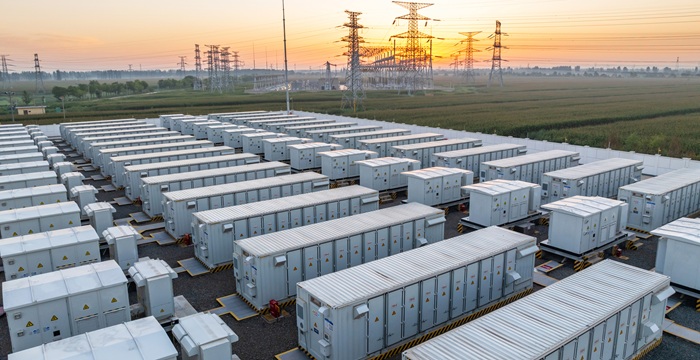
Utility-scale battery investment with legislated reliability and revenue certainty in Australia’s largest energy storage market
Victoria is building one of Australia’s most significant energy storage pipelines — creating long-term opportunities across grid-scale batteries and storage solutions spanning short, medium and long-duration applications.
As renewable generation accelerates, storage is central to maintaining reliability, managing price volatility and unlocking new capacity. Victoria’s legislated energy and storage targets, competitive procurement mechanisms and coordinated transmission planning provide the certainty investors require.
Victoria’s energy system is transitioning rapidly:
- Strong growth in utility-scale solar and onshore and offshore wind
- Scheduled coal generation retirement this decade
- Rising electricity demand across the board.
Energy storage underpins this shift. It firms variable renewables, strengthens system security and supports new industrial load. These programs complement opportunities in the National Electricity Market (NEM), overseen by the Australian Energy Market Operator.
Investors are supported to deliver at scale by Victoria’s advanced manufacturing capability, highly skilled energy workforce, world-leading battery and materials research and access to Australia's rich critical minerals deposits.
Growing demand in Victoria and across the Asia-Pacific region provides original equipment manufacturers with long-term pipeline visibility and export potential.
Global companies such as Eku Energy, Energy Dome, Equis, European Energy, Generali Investments, Neoen, Samsung, Sosteneo SGR, Tesla, Trina Solar are already investing in Victoria’s energy storage sector — reinforcing the state’s position as a leading destination for storage investment.
At a glance
- Australian energy market revenue for batteries increased by 44% in 2025.
- Australia is the first country in the world to have over 1 GWh of utility-scale energy storage per million people.
- Victoria has 12 commissioned large-scale storage systems and 3 in commissioning – with a total output capacity of 1028 MW and storage capacity of more than 1.7 GWh.
- Victoria is the first Australian state to achieve 1GW BESS (Battery Energy Storage System) charging - hitting 1,049 MW, a ~33% increase on the previous record and ~480% year-on-year growth.
- A growing energy sector workforce is projected to grow to 68,000 by 2040.
Opportunities
Establish battery storage facilities
Australia will need:
- By 2030 - 19 GW to 24 GW of dispatchable storage capacity
- By 2035 - 33 GW to 36 GW
- By 2025 - 49 GW to 57 GW (660 GWh of energy storage).
Demand is driven by:
- Rising demand for renewable energy options from businesses and homes across Australia.
- Australia’s population will rise to 37–38 million by 2050.
- Victoria's population is expected to grow from ~ 7 million to 8.5 million by 2035 and 10 million by 2050.
- Australian Energy Market Operator (AEMO) forecasts that Australia will need 19 GW to 24 GW of dispatchable storage capacity by 2030, 33 GW to 36 GW by 2035 and 49 GW to 57 GW (delivering around 660 GWh of energy storage) by 2050.
- The Victorian Government has legislated stringent renewable energy targets and is replacing ageing coal assets.
Manufacture energy storage components
- By 2035, Victoria is estimated to need:
- up to 1,350 utility-scale battery packs
- 212,000 distributed battery packs.
- Rising local, national and regional demand for batteries creates a foundation for providing original equipment manufacturers with long-term pipeline certainty.
Participate in the energy storage supply chain
- Provide Frequency Control Ancillary Services (FCAS), and be paid by AEMO to help stabilise grid frequency, alongside other essential system services.
- Support the mining, refining and co-located manufacturing of battery-grade critical and rare earth minerals in Victoria.
- As systems reach end-of-life, demand is growing for local recycling facilities near population centres to recover high value materials like lithium and graphite.
- Generate returns through diverse revenue streams including energy arbitrage, grid support services, virtual power plants and a System Integrity Protection Scheme (SIPS).
Why Victoria for energy storage investment?
Victorian policy certainty backed by long-term energy targets, planning pathways and partnerships
- Victoria has a legislated net zero by 2045 target, the first Australian state to do so and the most ambitious.
- Victoria’s legislated energy storage targets
- 2.6 GWby 2030
- 6.3 GW by 2035.
- Agreements are in place for the structured closure of the state's largest coal-fired generators by 2028 and 2035, creating a vast market opening for renewable energy storage.
- Direct equity partnerships in major projects like the 600 MW/1.6 GWh Melbourne Renewable Energy Hub reduce the capital burden on private developers.
- Fast tracked approvals through the Development Facilitation Program, which accelerates planning permits for large-scale renewable facilities, reducing bureaucratic delays for global developers.
Access to critical minerals and integrated supply chains
- Direct access to Australia’s globally significant critical mineral reserves, supporting secure and resilient battery supply chains.
- Australia produces 8 of the 9 key elements required for lithium-ion battery production, including a global lead in lithium.
- Australia hosts major deposits of high-quality cobalt, lithium, manganese, rare-earth elements, tungsten and vanadium.
- Victoria’s northwest region holds globally significant mineral sands deposits, including:
- 22% of Australia’s ilmenite (~7% of global economically-demonstrated resource)
- 51% of Australia’s rutile (~32% of global economically-demonstrated resource)
- 39% of Australia’s zircon (~27% of global economically-demonstrated resource).
- Emerging exploration activity across Victoria for lithium, nickel and zinc supports future battery material supply opportunities.
- Flexible investment models allow minerals to be refined near their source or co-located with advanced manufacturing and processing facilities in Victoria.
- The Victorian Government’s Critical Mineral Roadmap supports co-ordinated development across mining, processing and downstream manufacturing.
Significant Victorian government support for sophisticated infrastructure
- The 2025 Victorian Transmission Plan identifies priority Renewable Energy Zones (REZs) and optimal locations for storage development - supporting timely grid connection and reducing congestion risk.
- $1 billion committed to re-establish the State Electricity Commission (SEC) to accelerate large-scale renewable generation and storage projects.
- Fast-tracked the Victorian Big Battery (VBB) — one of the largest batteries (300 MW/450 MWh) in the Southern Hemisphere — incorporating a System Integrity Protection Scheme (SIPS) to increased power flow transfer capacity on the Victoria–NSW Interconnector during peak demand.
- $42 million initiative to install distributed battery energy storage systems (BESS) infrastructure across Victoria, including the Neighbourhood Battery Initiative (NBI), offering grants of up to $400,000 per project to demonstrate multi-use, community-scale storage applications.
- $10 million Microgrid Demonstration Initiative funds high-tech, commercial-ready microgrids and Virtual Power Plants (VPPs) to test advanced local energy management and islanding capabilities.
- Port of Melbourne provides an ideal gateway for exporting Victorian-made batteries to growing markets in New Zealand, Indonesia, Malaysia and Thailand.
Established supply chains and a skilled workforce
- Australia's leading manufacturing state, providing a strong base for energy storage infrastructure and component production.
- Expanding local manufacturing and supply chain for battery components, supporting faster project delivery and reducing reliance on offshore sourcing.
- The Victorian Government and Deakin University $10.3 million Battery Research and Innovation Hub– a world-class facility for battery design, fabrication and testing to build Australia’s role in the global supply chain for advanced batteries.
- Large and growing energy workforce, projected to reach 68,000 by 2040.
- Melbourne is home to the National Training Centre in New Energy Skills.
- Globally-recognised innovation and research ecosystem in Melbourne, underpinning ongoing capability development in new energy technologies.
Government support and incentives
Ongoing strategic government initiatives support investment in energy storage and reduce investment risk.
Victorian Government
- State Electricity Commission (SEC) –$1 initial billion to co-invest with the private sector to accelerate 4.5 GW of renewables and storage by 2035
- Critical Mineral Roadmap – coordinated framework to support mining, processing and downstream manufacturing in battery supply chains
- Victorian Access Regime – streamlined transmission access framework supporting Renewable Energy Zones and timely project connection
- Neighbourhood Batteries program
- Melbourne Renewable Energy Hub.
Australian Government
- National Battery Strategy
- The $1.5 billion Future Made in Australia Innovation Fund supports the commercialisation and demonstration of new clean energy technologies, including batteries.
- Battery Breakthrough Program (part of the Future Made in Australia Innovation Fund) – $523 million in production-linked incentives to support developing critical battery manufacturing capabilities
- Cheaper Home Batteries Program – upfront discounts of approximately 30% for small business batteries between 5–100 kWh
- Capacity Investment Scheme (CIS) will be replaced by the Electricity Services Entry Mechanism (ESEM) in 2027 to accelerate post-2030 renewable generation by providing long-term (7–15+ year) revenue contracts for new, firm and dispatchable projects.
- The re-established State Electricity Commission (SEC) is co-investing $1 billion with private partners to deliver 4.5 GW of renewable generation and storage projects by 2035.
Recent investments
Public projects
- Melbourne Renewable Energy Hub (Plumpton) – 600 MW/1.6 GWh by SEC and Equis – one of the world's largest battery projects
- SEC Renewable Energy Park (Horsham): – 100 MW 2-hour battery co-located with a 119 MW solar farm
- Wooreen Battery (Hazelwood North) – 350 MW/1.4 GWh project being delivered by EnergyAustralia under a Structured Transition Agreement with the government
- Koorangie Battery (Kerang) – 185 MW/370 MWh in the Murray Renewable Energy Zone, delivered by Sosteneo and Edify Energy.
Private projects
- Anakie Solar-Storage – 5.8 MW/11 MWh by Billion Watts
- Bulgana Green Power Hub – 20 MW/34 MWh by Neoen
- Hazelwood Battery Energy Storage System (BESS) –150 MW/150 MWh by ENGIE and Eku Energy
- Kiewa Valley BESS – 500 MW by Trina Solar
- Mortlake Battery – 300 MW/650 MWh by Origin Energy
- Rangebank Battery – 200 MW/400 MWh by Eku Energy and Shell Energy
- Victorian Big Battery Geelong – 300 MW by Neoen.
Looking to invest in an energy storage facility of the battery supply chain in Victoria?
Our team can help you navigate the market to fast-track your project and avoid costly mistakes.
Explore how we can help.
Frequently Asked Questions (FAQs)
What underpins long-term revenue certainty for storage assets in Victoria?
Revenue certainty is supported by both legislated targets and system-level demand.
Victoria has legislated energy storage targets of 2.6 GW by 2030 and 6.3 GW by 2035, alongside a net zero by 2045 commitment and scheduled coal plant retirements. These structural changes are driving sustained demand for firming capacity.
At a national level, the Australian Energy Market Operator forecasts Australia will require up to 57 GW / 660 GWh of dispatchable storage by 2050, reinforcing long-term market depth.
Projects can access diversified revenue streams including:
- Wholesale market arbitrage in the National Electricity Market (NEM)
- Frequency Control Ancillary Services (FCAS)
- Long-term government-backed contracts
- Capacity-style mechanisms transitioning from the Capacity Investment Scheme to the Electricity Services Entry Mechanism
This combination of legislated targets, system need and procurement mechanisms supports bankable project structures.
How does Victoria reduce grid connection and development risk?
Victoria is actively coordinating transmission planning and storage deployment to improve connection certainty.
The 2025 Victorian Transmission Plan identifies priority Renewable Energy Zones (REZs) and optimal storage locations, helping to reduce congestion risk and improve alignment between generation, storage and network upgrades.
Additional risk mitigation measures include:
- The Victorian Access Regime, streamlining transmission access
- Fast-tracked approvals under the Development Facilitation Program
- Structured coal closure agreements providing forward visibility of capacity gaps
- State co-investment through the State Electricity Commission (SEC) in large-scale projects.
This coordinated approach reduces development delays and enhances confidence in delivery timelines.
What advantages does Victoria offer across the battery supply chain?
Victoria offers opportunities beyond asset ownership, spanning manufacturing, materials processing and end-of-life recycling.
Competitive advantages include:
- Access to Australia’s globally significant critical mineral reserves, including lithium and rare earth elements
- A coordinated Critical Mineral Roadmap supporting mining, refining and downstream processing
- Advanced manufacturing capability and an expanding local battery component supply chain
- A projected energy workforce of 68,000 by 2040
- Established export pathways through the Port of Melbourne to Asia-Pacific markets.
With rising national and regional demand for storage, Victoria provides both domestic market scale and export potential for original equipment manufacturers and integrated supply chain investors.