Solar energy investment opportunities in Victoria
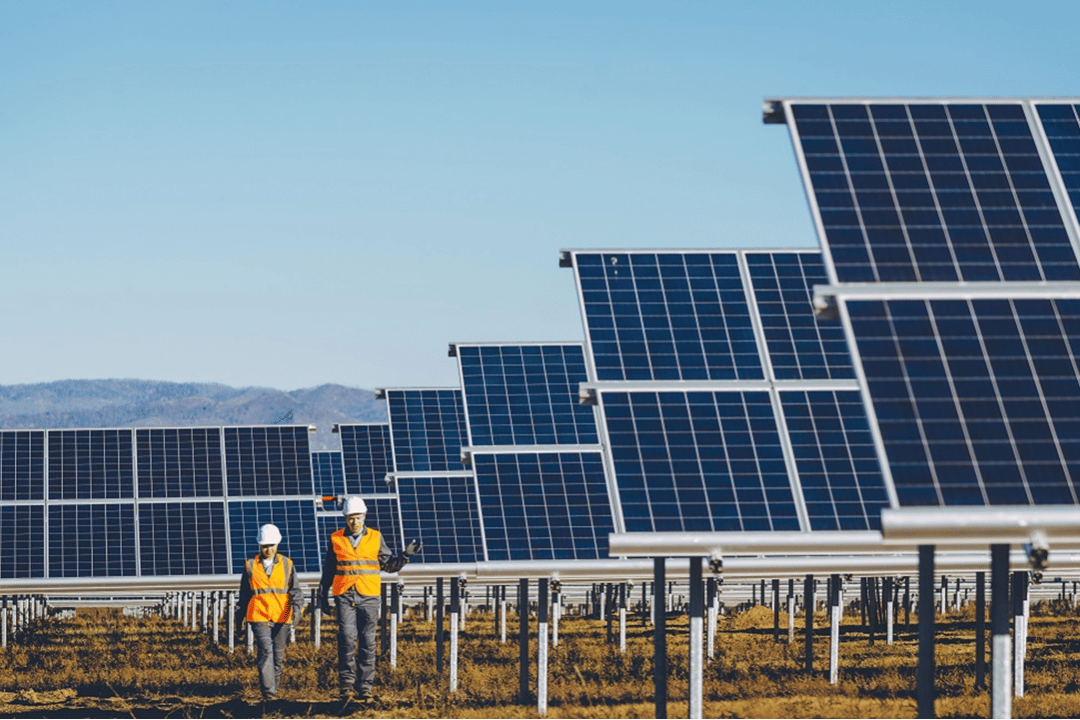
Policy-backed, grid-connected solar generation and manufacturing opportunities
As a critical national energy hub, Victoria offers investment opportunities across the solar energy value chain, from utility-scale electricity generation to advanced manufacturing and supply chain development.
Solar energy is central to Victoria’s legislated renewable energy targets and net-zero emissions targets providing long-term demand certainty for new generation and supporting infrastructure.
To meet this demand, Victoria will need significant expansion of solar capacity by 2035, including millions of additional utility-scale and distributed photovoltaic (PV) panels, reinforcing the scale of opportunity for developers, manufacturers and suppliers.
Growing electricity demand, clear energy transition policy and planned transmission upgrades are creating favourable conditions for large-scale solar projects. At the same time, Victoria’s established advanced manufacturing capability and skilled workforce support the local production of solar panels and components and balance of system equipment.
Together, these factors position Victoria as a competitive and de-risked location for investors looking to develop, manufacture or supply solar energy solutions at scale.
Join global companies such as ACCIONA Energía, Enel Green Power, Engie, European Energy, FRV (Fotowatio Renewable Ventures), INTEX Corporation and X-ELIO, currently operating in Victoria’s solar sector.

At a glance
- 56 utility-scale solar farms operating or under construction (2026), delivering ~ 2.2 GW – well short of the 25 GW of expected demand by 2035.
- Strong solar conditions, particularly in the northwest of Victoria, with annual solar irradiance above 1,900 kWh/m²/y.
- Initial $1 billion invested by the Victorian Government to deliver 4.5 GW of new renewable generation and storage.
- Established and growing energy sector workforce, projected to grow to 67,000 by 2040.
Opportunities
Establish grid connected utility-scale solar energy generation and storage facilities
- There is rising demand for renewable energy options from businesses and homes across Australia.
- Victoria's population is expected to grow from ~ 7 million to 8.5 million by 2035, 10 million by 2050.
- The State Government of Victoria has legislated stringent renewable energy targets and is replacing ageing coal assets.
- Victoria will need an additional 25 GW of new renewable and storage capacity by 2035.
Manufacture solar panels to meet rising demand
- Victoria is estimated to need up to 5.8 million utility PV solar panels and 23 million distributed PV solar panels by 2035.
- Initial Victorian demand for panels creates a foundation for providing original equipment manufacturers (OEMs) with long-term pipeline certainty.
Participate in the solar industry supply chain to further grow the sector
- With exponential growth in demand, Victoria’s solar manufacturing and supply chain capabilities have been growing progressively since the early 2010s.
- Local businesses are well-equipped to contribute to project development across the entire supply chain.
Why Victoria for solar energy investment?
Victorian policy certainty backed by long-term energy targets and planning pathways
- Victoria has a legislated net zero by 2045 target, the first Australian state to do so and the most ambitious
- Victoria has legislated complimentary renewable storage targets of:
- at least 2.6 GW of energy storage by 2030
- at least 6.3 GW by 2035.
- The Victorian Government has established approvals and planning pathways for large-scale projects.
- Fast-tracked approvals through the Development Facilitation Program which accelerates planning permits for large-scale renewable facilities, reducing bureaucratic delays for global developers.
- The Victorian Government has declared Renewable Energy Zones (REZs).
Victoria combines favourable solar resources with diverse land availability
- Strong solar irradiation, particularly in the northwest of Victoria, with levels exceeding 1,900 kWh/m²/y – higher than most of Western Europe.
- Consistent energy generation conditions, with more than 2,200 hours of sunshine annually across the state supporting reliable year-round solar output.
- Victoria offers suitable land for large scale development. Renewable Energy Zones (REZs), such as the Murray River and Western Victoria have been specifically identified as optimal sites for hosting large-scale solar farms.
Significant Victorian government support for sophisticated infrastructure
- Victorian Transmission Plan (VTP) – a 15-year strategic roadmap to ensure necessary infrastructure exists to connect new solar projects to the grid.
- Victorian Government capital commitment of $1 billion to re-establish the State Electricity Commission (SEC) and accelerate large-scale renewable generation and storage.
Established solar supply chains and a skilled workforce
- Australia's leading manufacturing state, providing a strong base for energy infrastructure and component production
- Expanding local manufacturing and supply chain for solar components, supporting faster project delivery and reducing reliance on offshore sourcing.
- Large and growing energy workforce, projected to reach 67,000 by 2040 , supported by the National Training Centre in New Energy Skills located in Melbourne.
- Globally recognised innovation and research ecosystem in Melbourne, underpinning ongoing capability development in new energy technologies.
Government support and incentives
Ongoing strategic Victorian Government initiatives support investment in solar and reduce investment risk.
Victorian Government
- Development Facilitation Program – fast-tracking of planning approvals for large, renewable energy facilities
- Solar Sunshot program – production subsidies and grants for the solar-photovoltaic supply chain
- $1.3 billion Solar Homes Program.
Australian Government
Recent investments
Public projects
- SEC is delivering 4.5 GW of new renewable energy generation and storage across Victoria by 2035 - almost 20% of the 25 GW Victoria is expected to need, according to the Australian Energy Market Operator’s (AEMO) 2024 Integrated System Plan (ISP).
- Horsham Solar Farm –118.8 MW of solar with 50 MW/100 MWh of battery storage, acquired by the SEC to form part of the SEC Renewable Energy Park.
Private projects
- Goorambat East Solar Farm – 250 MW by Engie
- Ballantine Solar Farm – 85 MW with 70 MWh storage by Elgin Energy
- Derby Solar Project – 95 MW with 85 MW/100 MWh storage by Sungrow Renewable Energy
- Fulham Solar Farm & DC Coupled Battery – 80 MW with 80 MW/100 MWh storage by Octopus Investments
- Frasers Solar Farm – 77 MW by South Energy
- Glenrowan Solar Farm – 102 MW by Pacific Partnerships
- Kiamal Solar Farm – Stage 2: 150 MW with 150 MW/300 MWh storage by Total Eren
- Lancaster Solar Farm – 106 M) by European Energy.
Looking to invest in solar or storage in Victoria?
Our team can help you navigate the market to fast-track your project and avoid costly mistakes.

Frequently Asked Questions (FAQs)
Is solar investment in Victoria commercially viable over the long term? Is solar investment in Victoria commercially viable over the long term?
Yes. Utility-scale solar in Victoria benefits from strong solar resources, a mature electricity market and growing demand from corporates and retailers seeking long-term power purchase agreements (PPAs). Investors typically structure projects with a mix of contracted and merchant revenue to support stable, long-dated returns.
Victoria’s energy transition and electrification of industry, transport and households are expected to underpin sustained demand for renewable generation over the coming decades.
There is also the opportunity to pair utility solar with storage to increase commercial return.
What policy, planning and grid risks should investors consider?
Victoria offers a stable policy and regulatory environment for renewable energy investment. Key considerations for solar investors include planning approvals, grid connection processes and congestion management.
The Victorian Government is investing in transmission upgrades and renewable energy zones to improve grid access and reduce connection risk. Early engagement with government, network service providers and local councils is critical to navigating approvals efficiently.
Can solar projects be delivered at scale in Victoria?
Yes. Victoria has an established renewable energy ecosystem with experienced developers, EPC (engineering, procurement, and construction) contractors and professional services firms. As Australia’s leading manufacturing state, Victoria also has growing local supply chain capability and a deep pool of skilled workers supporting project delivery and operations.
This depth of capability reduces execution risk and supports on-time, on-budget delivery for large-scale solar projects.