Energy infrastructure in Melbourne | Victoria
Reliable, interconnected and transitioning to 95% renewable electricity by 2035
Victoria’s energy infrastructure is being transformed to deliver reliable, scaleable and future ready energy to support industrial growth, electrification and the transition to net zero.
Legislated targets – including 95% renewable electricity by 2035 – and the planned closure of the state’s final coal-fired power stations are creating opportunities for large-scale investment across generation, transmission and storage. This transition is expected to unlock around $35 billion in private investment, supported by coordinated planning and a strong project pipeline.
Victoria operates one of the most complex and interconnected energy systems in the southern hemisphere. Its central position in the National Electricity Market (NEM), combined with advanced grid infrastructure and near-universal smart meter coverage, provides a strong foundation for innovation, efficiency and cross-border energy flows.
Victoria’s role in Australia’s electricity market
- Strong interconnection enables energy flows between New South Wales, South Australia and Tasmania.
- Major projects such as VNI West and Marinus Link will strengthen Victoria’s role as both an exporter of renewable energy and importer of firmed supply.
- Dedicated transmission planning through VicGrid supports a coordinated, state-specific development pathway.
Key energy infrastructure advantages
- One of the most interconnected grids in Australia with around 6,500 km of high-voltage transmission and over 200,000 km of distribution network – providing scale and flexibility for large energy users.
- Direct access to multiple state markets through 5 major interconnectors within the NEM, enabling cross-border trading and price optimisation.
- The most digitally advanced grid in Australia, with near-universal smart meter coverage across approximately 3 million metres – supporting real-time data, demand management and integration of distributed energy.
- Coordinated Renewable Energy Zones (REZs), led by VicGrid, reducing connection delays and improving certainty for new projects.
- Major transmission upgrades underway to unlock renewable energy at scale and connect it efficiently to industrial and metropolitan demand centres.
- Victoria recorded average wholesale electricity prices of $37/MWh in Q4 2025 – lower than New South Wales $103/MWh and the NEM average $50/MWh.
- One of the fastest-growing storage pipelines in the NEM, supporting grid stability and enabling consistent, high-quality power for 24/7 operations.
- Clear, legislated targets and long-term planning frameworks providing greater policy certainty and visibility compared to other Australian jurisdictions.
Victorias advanced grid infrastructure
Generation
- Victoria’s system combines established generation with a rapidly growing renewable energy portfolio.
- Approximately 12,000–14,000 MW of generation capacity is transitioning from large-scale fossil fuel assets to distributed renewable sources.
- In FY2024/25, renewable energy in Victoria accounted for 42.4% of generation, led by wind (21.8%) and solar (14.9%)
- The state reached a record 82.5% instantaneous renewable generation in October 2025.
- Over 650,000 Victorian homes (nearly one in 3) have rooftop solar, contributing over 4,000 MW of invisible capacity to the grid, equivalent to 2 large coal-fired power stations.
- Businesses can secure long-term energy supply through power purchase agreements (PPAs), supporting cost certainty and decarbonisation.
- Generation assets participate in the NEM, enabling access to a broader market.
Transmission network
- Victoria’s grid is deeply integrated within the NEM, allowing electricity to flow across state borders and improving system resilience.
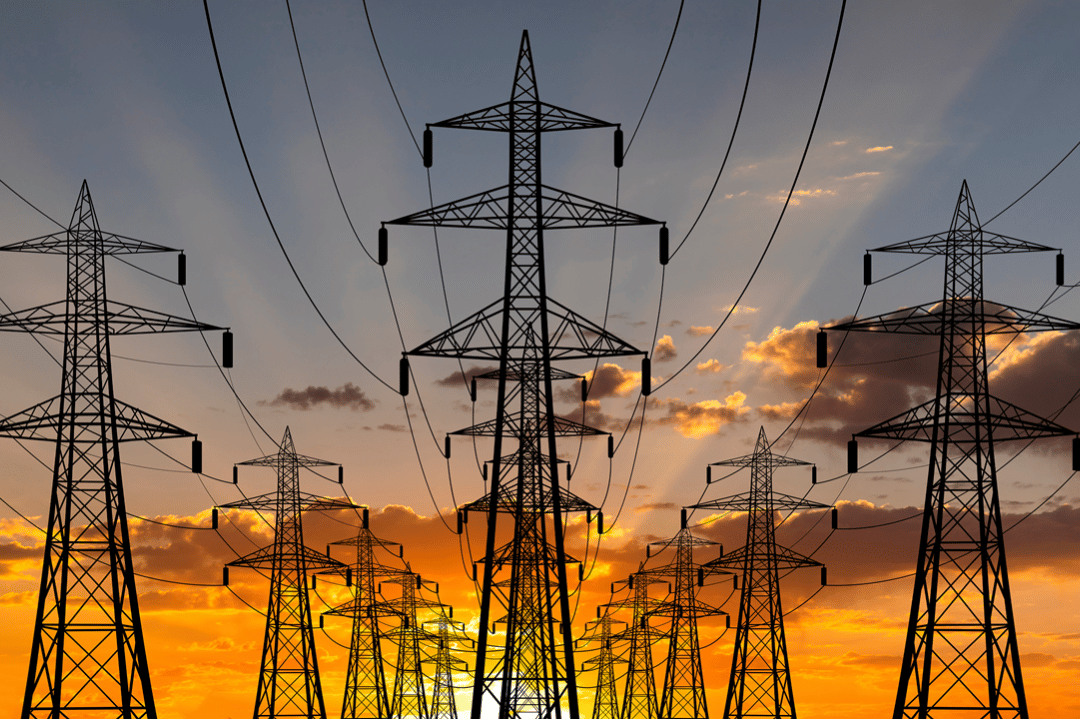
- Victoria’s high-voltage transmission network enables electricity to move efficiently from generation sources to demand centres.
- Major projects including VNI West, Western Renewables Link and Marinus Link are expanding capacity and improving reliability.
- A $480 million grid strengthening program is modernising infrastructure across 12 priority projects.
- Transmission planning and smart grid technologies help integrate variable renewable energy while maintaining system stability.
Distribution
- Advanced software and control systems enable real-time monitoring and balancing of supply and demand, reducing the risk of outages and improving efficiency.
- Near universal smart meter coverage (over 99%) – the highest in Australia.
- Advanced grid enables integration of distributed energy, accommodating large volumes of rooftop solar, batteries and electric vehicles – turning traditionally passive users into active participants in the energy system.
- Supports innovation in virtual power plants (VPPs), smart electric vehicle charging and dynamic pricing.
Energy storage and firming capacity
Energy storage firms up variable renewables by storing excess energy during the day and discharging it during peak evening demand.
- The Victorian Government has legislated energy storage targets to ensure grid reliability:
- At least 2.6 GW of storage capacity by 2030
- At least 6.3 GW of storage capacity by 2035.
- 730 MW of storage operating, with 2.9 GW under construction or commissioning.
- Victoria has the highest concentration of utility-scale battery storage in the NEM. Key projects include:
- Melbourne Renewable Energy Hub (SEC) – 600 MW/1.6 GWh battery, one of the world's largest
- Victorian Big Battery – 300 MW/450 MWh facility provides critical grid support and helps increase transmission capacity from NSW
- Portland Energy Park – 1 GW facility will be the state's largest battery project
- Wooreen Battery – 350 MW / 1.4 GWh, operational by the end of 2027
- Hazelwood Battery – 150 MW / 150 MWh system built on the site of the retired Hazelwood coal plant
- Rangebank BESS – a 200MW battery in Victoria stabilising the grid and powering 80,000 homes.
- SEC will deliver 1 GW of new storage capacity by 2028 and is assessing an additional 1 GW of long-duration storage opportunities.
- Distributed storage programs, including the 100 Neighbourhood Batteries Program and Solar Homes Program support local grid stability.
Gas and alternate fuels
- Victoria is transitioning away from fossil gas through a multi-year Gas Substitution Roadmap aligned with its net zero by 2045 target.
- In 2026, gas contributes approximately 15-17% of Victoria's net greenhouse gas emissions.
- Electrification is being prioritised across residential and commercial sectors, with regulatory changes supporting the shift.
- The Victorian Government is supporting hydrogen production and refuelling infrastructure, as well as biogas capture for renewable electricity generation for high-heat industrial applications.
- Industrial Renewable Gas Guarantee (planned for 2027) – a market-based certificate scheme to stimulate investment in biomethane and green hydrogen, targeting 4.5 PJ of annual supply by 2035.
The Victorian Government green-lighted the following projects:
- Viva Energy Hub – Australia’s first public renewable hydrogen refuelling station for heavy transport, featuring a 2.5 MW electrolyser in Geelong.
- AGIG’s Hydrogen Park Murray Valley – a 10 MW electrolyser project under development, set to be the largest on the eastern seaboard.
- Wodonga Wastewater Treatment Plant upgrade will capture biogas for on-site renewable electricity generation.
Renewable Energy Zones (REZs)
- The 2025 Victorian Transmission Plan identifies 6 proposed renewable energy zones.
- Coordinated development areas are led by VicGrid to streamline connections and reduced project risk.
- Infrastructure is being concentrated in REZs to facilitate the production and distribution of energy from onshore wind, solar, hydro and offshore wind.
- The Gippsland Shoreline REZ is a strategic area for underground cables needed to connect future offshore wind farms to the grid.
Victorian Government investment in energy infrastructure
The Victorian Government is actively investing in and coordinating energy infrastructure to support long-term growth and desired transition.
- Established VicGrid as its transmission planning operator to fast-track infrastructure.
- Investing $480 million in a portfolio of projects to strengthen and modernise Victoria's grid.
- Established 6 Renewable Energy Zones (REZs) to coordinate new wind and solar connections.
- $1 billion committed through State Electricity Commission (SEC) to accelerate 4.5 GW of renewable power and storage. It has invested in:
- Melbourne Renewable Energy Hub (MREH) – 1.6 GWh ($245 million)
- Delburn Wind Farm – 205 MW ($650 million)
- SEC Renewable Energy Park – 119 MW solar/100 MW battery ($370 million).
Victorian Government energy policy
- The 2025 Victorian Transmission Plan identifies critical grid upgrades and 4 new major transmission projects needed through 2040.
- Victorian Access Regime – a new licensing system for grid access to provide more certainty for investors in the zones.
- Cheaper, Cleaner, Renewable: Our Plan for Victoria's Electricity Future - highlights investment opportunities for the private sector to partner with the Victorian Government through to 2035.
- Victorian Renewable Energy Zones Development Plan Directions Paper February 2021
Victorian Government energy programs
- Energy Innovation Fund supports the commercialisation of innovative technologies, including offshore wind and renewable hydrogen. Round 3, launched in mid-2025, provides $10 million specifically for industrial electrification.
- Solar Homes Program
- Victorian Energy Upgrades has been extended until 2045.
- TAFE Clean Energy Fund.
Need assistance? We are here to help
We can help you better understand how Victoria’s energy infrastructure can support your project.

Frequently Asked Questions (FAQs)
How reliable is Victoria’s energy supply for business operations?
Victoria’s energy system combines established infrastructure with growing renewable generation, storage and grid upgrades. Its integration within the National Electricity Market enables cross-border energy flows, supporting system reliability and consistent supply for industry.
Can businesses access renewable energy in Victoria?
Yes. Victoria has a strong pipeline of wind, solar and emerging offshore wind projects. Businesses can access renewable energy through retail contracts or power purchase agreements (PPAs), supporting both cost certainty and decarbonisation
How does Victoria support new energy and infrastructure projects?
Victoria provides coordinated planning and clear policy frameworks to support project development. Initiatives led by VicGrid, along with Renewable Energy Zones and long-term transmission planning, help streamline grid connections and reduce investment risk.