Solar energy investment opportunities in Victoria
向清洁能源的历史性转变正释放大量的投资机遇
维多利亚州拥有蓬勃发展的可再生能源行业、丰富的自然资源和坚定的能源目标,这对于全球投资者而言是重大机遇,投资者可开启创新项目,在盈利的同时,实现2030年清洁能源占比50%的目标。
一项16亿澳元的能源支持一揽子计划将进一步扩大可再生能源枢纽和项目规模,在该计划的推动下,维多利亚州快速发展的可再生能源行业,正利用全球专业知识和技术创建一个去碳化的能源行业。
Mainstream Renewable Power、BayWa r.e、沃尔索(Wirsol)、阿驰奥纳(Acciona)、Trust Power和Tilt Renewables等全球公司均选择投资维多利亚州可持续且繁荣的经济。在此,我们也期待您的加入。

At a glance
- Australian energy market revenue for batteries increased by 44% in 2025.
- Australia is the first country in the world to have over 1 GWh of utility-scale energy storage per million people.
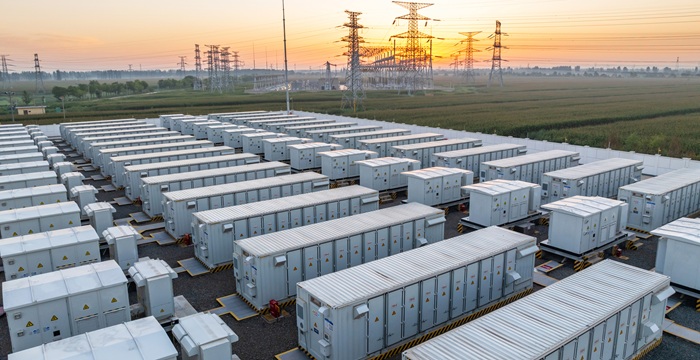
- Victoria has 12 commissioned large-scale storage systems and 3 in commissioning – with a total output capacity of 1028 MW and storage capacity of more than 1.7 GWh.
- Victoria is the first Australian state to achieve 1GW BESS (Battery Energy Storage System) charging - hitting 1,049 MW, a ~33% increase on the previous record and ~480% year-on-year growth.
- A growing energy sector workforce is projected to grow to 68,000 by 2040.
Opportunities
Establish battery storage facilities
Australia will need:
- By 2030 - 19 GW to 24 GW of dispatchable storage capacity
- By 2035 - 33 GW to 36 GW
- By 2025 - 49 GW to 57 GW (660 GWh of energy storage).
Demand is driven by:
- Rising demand for renewable energy options from businesses and homes across Australia.
- Australia’s population will rise to 37–38 million by 2050.
- Victoria's population is expected to grow from ~ 7 million to 8.5 million by 2035 and 10 million by 2050.
- Australian Energy Market Operator (AEMO) forecasts that Australia will need 19 GW to 24 GW of dispatchable storage capacity by 2030, 33 GW to 36 GW by 2035 and 49 GW to 57 GW (delivering around 660 GWh of energy storage) by 2050.
- The Victorian Government has legislated stringent renewable energy targets and is replacing ageing coal assets.
Manufacture energy storage components
- By 2035, Victoria is estimated to need:
- up to 1,350 utility-scale battery packs
- 212,000 distributed battery packs.
- Rising local, national and regional demand for batteries creates a foundation for providing original equipment manufacturers with long-term pipeline certainty.
Participate in the energy storage supply chain
- Provide Frequency Control Ancillary Services (FCAS), and be paid by AEMO to help stabilise grid frequency, alongside other essential system services.
- Support the mining, refining and co-located manufacturing of battery-grade critical and rare earth minerals in Victoria.
- As systems reach end-of-life, demand is growing for local recycling facilities near population centres to recover high value materials like lithium and graphite.
- Generate returns through diverse revenue streams including energy arbitrage, grid support services, virtual power plants and a System Integrity Protection Scheme (SIPS).
Why Victoria for energy storage investment?
Victorian policy certainty backed by long-term energy targets, planning pathways and partnerships
- Victoria has a legislated net zero by 2045 target, the first Australian state to do so and the most ambitious.
- Victoria’s legislated energy storage targets
- 2.6 GWby 2030
- 6.3 GW by 2035.
- Agreements are in place for the structured closure of the state's largest coal-fired generators by 2028 and 2035, creating a vast market opening for renewable energy storage.
- Direct equity partnerships in major projects like the 600 MW/1.6 GWh Melbourne Renewable Energy Hub reduce the capital burden on private developers.
- Fast tracked approvals through the Development Facilitation Program, which accelerates planning permits for large-scale renewable facilities, reducing bureaucratic delays for global developers.
Access to critical minerals and integrated supply chains
- Direct access to Australia’s globally significant critical mineral reserves, supporting secure and resilient battery supply chains.
- Australia produces 8 of the 9 key elements required for lithium-ion battery production, including a global lead in lithium.
- Australia hosts major deposits of high-quality cobalt, lithium, manganese, rare-earth elements, tungsten and vanadium.
- Victoria’s northwest region holds globally significant mineral sands deposits, including:
- 22% of Australia’s ilmenite (~7% of global economically-demonstrated resource)
- 51% of Australia’s rutile (~32% of global economically-demonstrated resource)
- 39% of Australia’s zircon (~27% of global economically-demonstrated resource).
- Emerging exploration activity across Victoria for lithium, nickel and zinc supports future battery material supply opportunities.
- Flexible investment models allow minerals to be refined near their source or co-located with advanced manufacturing and processing facilities in Victoria.
- The Victorian Government’s Critical Mineral Roadmap supports co-ordinated development across mining, processing and downstream manufacturing.
Significant Victorian government support for sophisticated infrastructure
- The 2025 Victorian Transmission Plan identifies priority Renewable Energy Zones (REZs) and optimal locations for storage development - supporting timely grid connection and reducing congestion risk.
- $1 billion committed to re-establish the State Electricity Commission (SEC) to accelerate large-scale renewable generation and storage projects.
- Fast-tracked the Victorian Big Battery (VBB) — one of the largest batteries (300 MW/450 MWh) in the Southern Hemisphere — incorporating a System Integrity Protection Scheme (SIPS) to increased power flow transfer capacity on the Victoria–NSW Interconnector during peak demand.
- $42 million initiative to install distributed battery energy storage systems (BESS) infrastructure across Victoria, including the Neighbourhood Battery Initiative (NBI), offering grants of up to $400,000 per project to demonstrate multi-use, community-scale storage applications.
- $10 million Microgrid Demonstration Initiative funds high-tech, commercial-ready microgrids and Virtual Power Plants (VPPs) to test advanced local energy management and islanding capabilities.
- Port of Melbourne provides an ideal gateway for exporting Victorian-made batteries to growing markets in New Zealand, Indonesia, Malaysia and Thailand.
Established supply chains and a skilled workforce
- Australia's leading manufacturing state, providing a strong base for energy storage infrastructure and component production.
- Expanding local manufacturing and supply chain for battery components, supporting faster project delivery and reducing reliance on offshore sourcing.
- The Victorian Government and Deakin University $10.3 million Battery Research and Innovation Hub– a world-class facility for battery design, fabrication and testing to build Australia’s role in the global supply chain for advanced batteries.
- Large and growing energy workforce, projected to reach 68,000 by 2040.
- Melbourne is home to the National Training Centre in New Energy Skills.
- Globally-recognised innovation and research ecosystem in Melbourne, underpinning ongoing capability development in new energy technologies.
Government support and incentives
Ongoing strategic government initiatives support investment in energy storage and reduce investment risk.
Victorian Government
- State Electricity Commission (SEC) –$1 initial billion to co-invest with the private sector to accelerate 4.5 GW of renewables and storage by 2035
- Critical Mineral Roadmap – coordinated framework to support mining, processing and downstream manufacturing in battery supply chains
- Victorian Access Regime – streamlined transmission access framework supporting Renewable Energy Zones and timely project connection
- Neighbourhood Batteries program
- Melbourne Renewable Energy Hub.
Australian Government
- National Battery Strategy
- The $1.5 billion Future Made in Australia Innovation Fund supports the commercialisation and demonstration of new clean energy technologies, including batteries.
- Battery Breakthrough Program (part of the Future Made in Australia Innovation Fund) – $523 million in production-linked incentives to support developing critical battery manufacturing capabilities
- Cheaper Home Batteries Program – upfront discounts of approximately 30% for small business batteries between 5–100 kWh
- Capacity Investment Scheme (CIS) will be replaced by the Electricity Services Entry Mechanism (ESEM) in 2027 to accelerate post-2030 renewable generation by providing long-term (7–15+ year) revenue contracts for new, firm and dispatchable projects.
- The re-established State Electricity Commission (SEC) is co-investing $1 billion with private partners to deliver 4.5 GW of renewable generation and storage projects by 2035.
Recent investments
Public projects
- Melbourne Renewable Energy Hub (Plumpton) – 600 MW/1.6 GWh by SEC and Equis – one of the world's largest battery projects
- SEC Renewable Energy Park (Horsham): – 100 MW 2-hour battery co-located with a 119 MW solar farm
- Wooreen Battery (Hazelwood North) – 350 MW/1.4 GWh project being delivered by EnergyAustralia under a Structured Transition Agreement with the government
- Koorangie Battery (Kerang) – 185 MW/370 MWh in the Murray Renewable Energy Zone, delivered by Sosteneo and Edify Energy.
Private projects
- Anakie Solar-Storage – 5.8 MW/11 MWh by Billion Watts
- Bulgana Green Power Hub – 20 MW/34 MWh by Neoen
- Hazelwood Battery Energy Storage System (BESS) –150 MW/150 MWh by ENGIE and Eku Energy
- Kiewa Valley BESS – 500 MW by Trina Solar
- Mortlake Battery – 300 MW/650 MWh by Origin Energy
- Rangebank Battery – 200 MW/400 MWh by Eku Energy and Shell Energy
- Victorian Big Battery Geelong – 300 MW by Neoen.
Looking to invest in an energy storage facility of the battery supply chain in Victoria?
Our team can help you navigate the market to fast-track your project and avoid costly mistakes.
Explore how we can help.
维多利亚州清洁能源领域的空前机遇
为投资者提供成熟且不断发展的投资机遇,推动可再生能源、供应链技术和能源基础设施的创新。
发起可再生能源项目
- 从风能和太阳能领域的创新可再生能源机遇中获益。维多利亚州政府正支持一系列项目,推动能源系统去碳化以及减排。
- 依托蓬勃发展的国内和出口氢气市场进行产品开发。广泛的天然气网络、丰富的可再生资源以及与亚洲的出口联系推动了维多利亚州氢气市场的发展。
- 获得有机残余物向生物质原料转化以及变废为能领域的投资机会。维多利亚州有机残余物的年产量约为1000万吨
Develop supply chain services
- Modernisation of the electricity grid. The Victorian Government is working to improve the reliability and security of power supply by storing cheap renewable energy when the weather makes it plentiful, and discharging it into the grid when it is needed most
- Development of new infrastructure. The Victorian Government is laying the foundation for services that will change how energy is traded and consumed across the state, ensuring capacity for more renewable energy that withstands future climate change impacts, including more high-demand days during summer
提供新的储存技术
- 新的储存技术。维多利亚州正提供输送和管理电力的新方法,涵盖从电池技术到抽水站蓄能等领域。
- 电动汽车充电基础设施。维多利亚州政府正为投资者提供大量支持,以快速推进车辆充电基础设施在全州的推广,为这一不断增长的市场提供了重要机遇。