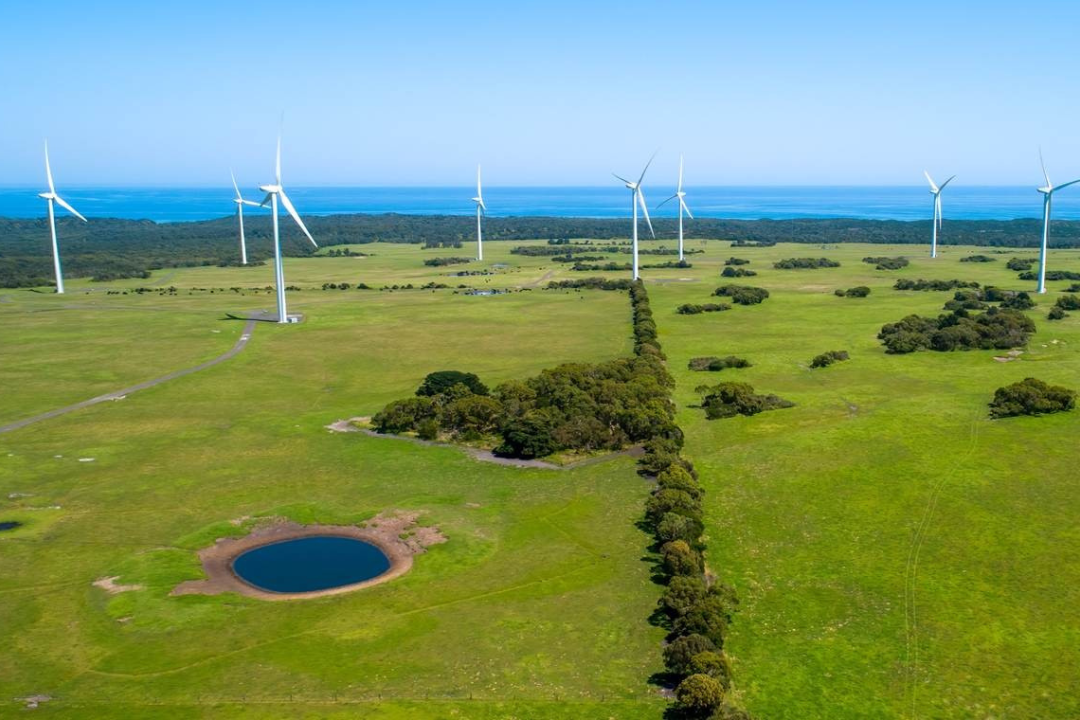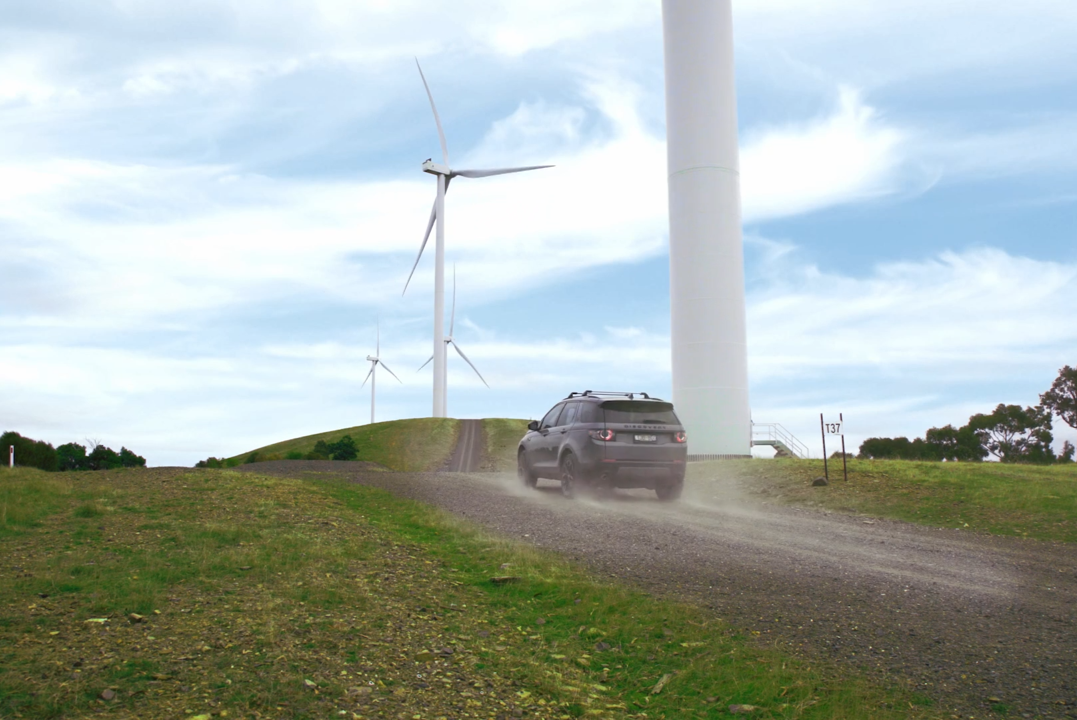
Scale onshore wind investment in Victoria

    715

    Onshore wind turbines

    9.7 GW

    Onshore wind capacity needed in Victoria to meet energy target

    68,000

    Energy workforce projection by 2040

    Victoria offers a mature, fast-growing onshore wind market with clear policy direction, strong project pipelines and proven delivery capability. This creates immediate opportunities to deploy capital across development, construction and long-term asset ownership.

    Backed by legislated renewable energy targets and a commitment to net zero emissions, Victoria is accelerating wind generation as a core part of its energy transition. A transparent regulatory environment, established planning frameworks and government programs support efficient project delivery and new capacity coming online.

    Australian demand for energy produced via onshore wind farms has never been higher. Victoria already has a strong base of operational wind farms and a robust development pipeline. Projects such as the Golden Plains Wind Farm, set to be the largest onshore wind farm in the Southern Hemisphere, highlights the scale of the opportunity.

    In Victoria alone, onshore wind sector generation needs to more than double its capacity – from 4.3GW to 9.7GW per year – to meet its 95% renewable energy targets by 2035.1

    Join global companies such as Acciona Energía (Italy), Iberdrola (Spain), Ingka Group (Sweden/Netherlands), Naturgy Energy GroupPartners Group (Switzerland), Shell (UK/Netherlands) and TagEnergy (France) demonstrating Victoria’s position as a competitive and investable onshore wind market.

    At a glance

    • As at mid-2025, Victoria has around 715 onshore wind turbines in operation, delivering ~ 5.47 GW of installed capacity, and additional projects under construction and progressing through development.2
    • To support Victoria’s legislated 95% renewable energy target by 2035, onshore wind capacity needs to grow around 9.7GW – an increase of 130% requiring an additional 1,100 turbines.3
    • High average wind speeds exceeding 8 m/s in key regions enables generation output per turbine than many global markets.2
    • A growing skilled energy workforce is projected to grow to 67,000 by 2040.4

    Opportunities

    • There is rising demand for renewable energy options from businesses and homes across Australia.
    • Australia’s combined onshore and offshore wind capacity will need to reach 60 – 90 GW by 2035–2045 to support for net zero by 2050 commitments.
    • Victoria's population is expected to grow from ~ 7 million to 8.5 million by 2035, 10 million by 2050.
    • Australia’s population will rise to 37–38 million by 2050.
    • Victoria will need an additional 9.7GW of onshore wind capacity by 2035 while estimates suggest that over 5,000. onshore wind turbines will be required across Australia by 2035 to meet demand.
    • Victoria’s Wind farms are connected to the state's electricity grid via high-voltage transmission lines and substations.

    • Victoria is estimated to need up 1,100 new wind turbines by 2035.
    • Industry groups like Beyond Zero Emissions (BZE) propose a goal of 33% local content across Australia’s projected turbine, which could generate $35 billion in revenue and 1,500 jobs.6
    • Forecast global shortages in key components like nacelles, blades, and towers over the next 5 to 10 years, increase the strategic value of local manufacturing and assembly.

    • Victoria’s industrial base supports investment across the full value chain, including development, engineering, fabrication, transport, installation and operations.
    • Growth in turbine deployment is driving increased demand for steel, composites, fibre and specialised materials used in towers and blades.
    • Growth in turbine deployment is driving increased demand for quality composite materials, fibreglass and steel used in towers and blades.
    • The wind turbine operation and maintenance (O&M) market is expanding, driving ongoing demand for services and replacement components like gearboxes and bearings - projected to increase to $906.28 million by 2032.7

    Onshore wind success stories

    Neoen-Bulgana-onshore-wind-3-2.png
    Energy New investment France Regional Victoria

    Neoen invests in Victoria's clean energy future

    Global renewable energy company, Neoen installed and activated the largest lithium-ion battery in the southern hemisphere in Victoria.

    3 min
    2 min
    Read more

    Why Victoria for onshore wind investment?

    Victorian policy certainty and legislated renewable energy targets

    • Victoria has a legislated net zero by 2045 target, the first Australian state to do so and the most ambitious.
    • Agreements are in place for the structured closure of the state's largest coal-fired generators by 2028 and 2035, creating a vast market opening for wind developers.
    • Fast tracked approvals through the Development Facilitation Program accelerates planning permits for large-scale renewable facilities, reducing bureaucratic delays.
    • Long-term contracts are available to renewable energy developers to build new projects in Victoria through the Victorian Renewable Energy Auction Scheme.
    • The levelised cost of energy (LCOE) for onshore wind is significantly lower than offshore alternatives, projected to be between $40–$59/MWh by 2030.

    Word-class wind resources and diverse land availability

    • Victoria is considered one of the best wind resource regions in the world.
    • High average wind speeds (exceeding 8 m/s, especially along the southern coastline) allow Victorian turbines to generate more electricity per unit of capacity than many other global regions.
    • Wind is the primary reason Victoria has frequently recorded the lowest wholesale electricity prices in the National Electricity Market (NEM).
    • The Victorian Government has  declared 5 onshore Renewable Energy Zones and a shoreline zone (to + streamline grid connection and transmission planning, providing clarity on the most suitable locations for new development.

    Significant Victorian government support for sophisticated infrastructure

    • Victoria's deep water port can accommodate turbine components and large scale wind turbine blades.
    • The Victorian Transmission Plan (VTP) identifies priority projects over the next 15 years to unlock wind-rich regions and connect them to major load centres.
    • Victorian Government capital commitment of $1 billion to re-establish the SEC and accelerate large-scale renewable generation and storage.

    Established supply chains and a skilled workforce

    • Australia's leading manufacturing state, providing a strong base for wind energy infrastructure and component production.
    • Established steel fabrication and electrical systems capability.
    • Expanding local manufacturing and supply chain for wind energy components, supporting faster project delivery and reducing reliance on offshore sourcing.
    • Clusters in Geelong and Portland regions underpin turbine manufacturing and assembly.
    • Large and growing energy workforce, projected to reach 67,000 by 2040, supported by the National Training Centre in New Energy Skills located in Melbourne.
    • Globally-recognised innovation and research ecosystem in Melbourne, underpinning ongoing capability development in new energy technologies.

    Government support and incentives

    Ongoing strategic Victorian Government initiatives support investment in solar and reduce investment risk.

    Victorian Government

    Australian Government

    Recent investments

    Public projects

    • $1.6 billion energy package to accelerate wind farm development, including direct investment through the SEC and streamlined project approvals.
    • Delburn Wind Farm – 205 MW/33 turbines by SEC.

    Private projects

    Looking to invest in onshore wind farms or the wind turbine supply chain in Victoria?

    Our team can help you navigate the market to fast-track your project and avoid costly mistakes.

    FAQs

    Victoria combines policy certainty with immediate market demand:

    • Legislated targets: net zero emissions by 2045 and 95% renewable energy by 2035
    • A large and growing pipeline, with capacity needing to increase by ~130% (an additional 9.7 GW)
    • Structured coal plant closures creating sustained demand for new generation
    • Established planning frameworks and fast-tracked approvals for major projects

    These settings reduce regulatory risk and provide long-term revenue visibility for investors.

    Victoria’s energy transition and population growth are driving sustained demand for renewable generation:

    • Electricity demand is rising as the state’s population grows from ~7 million to 8.5 million by 2035
    • Electrification of transport, industry and households is increasing power consumption
    • Coal-fired generation is being phased out by 2028 and 2035, creating a supply gap for renewables to fill
    • Corporate and industrial buyers are increasingly seeking long-term renewable power purchase agreements (PPAs) to meet decarbonisation targets

    These fundamentals provide a stable, long-term demand profile for onshore wind projects and support predictable revenue streams for investors.

    Victoria reduces delivery risk and improves project economics through:

    • Long-term offtake agreements via the Victorian Renewable Energy Auction Scheme (VRET)
    • Fast-tracked planning through the Development Facilitation Program
    • Targeted transmission upgrades under the Victorian Transmission Plan to unlock wind zones
    • Government investment in workforce development and local supply chains

    Combined with high wind speeds (exceeding 8 m/s in key regions), these factors support strong generation output and competitive project returns.

    Source

    1. A Tale of Two Approaches: How Does Victoria’s Energy Plan Differ from the 2024 ISP? - Australian Energy Council
    2. Victoria's Investment Prospectus - ONSHORE WIND - Energy
    3. A Cheaper, Cleaner, Renewable Future For Victoria - Premier of Victoria 
    4. Wind worker fact sheet - Energy
    5. Wind Supply Chains Briefing Paper - Beyond Zero Emissions
    6. Australia Wind Turbine Operation and Maintenance Market - Fortune Business Insights
    Was this helpful?